

The City of Jelgava is the first municipality in Latvia to use speech recognition software to optimize social work. The speech recognition software will simplify the daily work of employees at the Jelgava City Social Affairs Administration, improving the quality of their work, ensuring data-driven decision-making, and providing the ability to quickly access and utilize data accumulated by the administration.
SIA “Rehabilitation Center “Tērvete”” will be the first to begin using the new software to convert spoken information into text, in order to compile information about Jelgava residents who have received assistance at the center using Jelgava municipality funds. The implementation of the speech recognition program is being carried out by the IT company and maintainer of the Municipal Social Assistance and Social Services Administration Application (SOPA), SIA “ZZ Dats”.
Researchers from the Institute of Mathematics and Computer Science at the University of Latvia (LUMII) are also involved in the project, providing support for the development of the speech recognition tool so that it can, as effectively as possible, in at least 90% of cases, recognize different voice owners, speech style, speed, terms used in social affairs administration, etc.
Speech recognition in the social sector for the first time in Latvia
“Solutions for recognizing spoken Latvian are already in use across various sectors, but until now they have not been available in the social services sector. In the project “Development of a Latvian speech recognition and dictation system solution in the social services sector to ensure quality and accessibility,” we are currently developing such a system, and the Jelgava City Council will implement it at the turn of the year, but the solution will not be fully operational until early 2025. The goal of this project is to improve the work of service providers and local governments, significantly reduce the resources required to create case descriptions for social service clients, improve service quality, and, as a result, more effectively resolve clients’ problems. The speech recognition solution is planned to be developed as an open, horizontally scalable, and cloud-based platform. If necessary, it could be easily expanded for both more intensive use and to diversify the types of services for which the solution is applied. The tool is designed to facilitate the work of service providers who will be text-to-speech users, such as SIA “Rehabilitation Center “Tērvete””, which is included in this project as a tester of the new solution. The Jelgava Social Affairs Administration will also benefit, as it will receive more comprehensive information from social service providers regarding their clients and the services provided, as well as the results of those services, enabling it to address residents’ issues more effectively. “Following its implementation in Jelgava, we plan to expand the tool to include other types of social services and processes, as well as broaden the user base of the module so that other municipalities can also use it,” reveals Edžus Žeiris, director of SIA “ZZ Dats.”
The tool will transcribe voice recordings into text
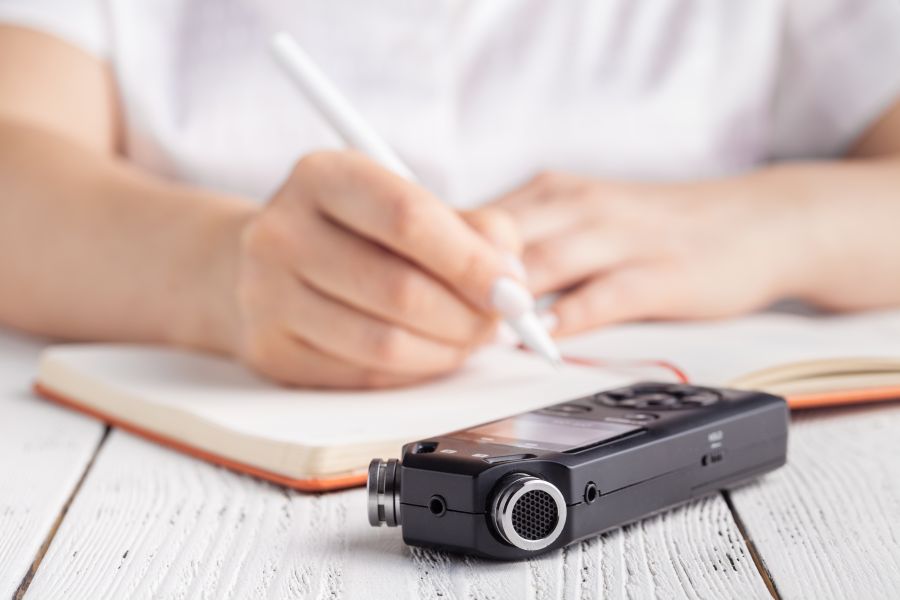
“One of the first institutions to use speech recognition software to optimize its work will be SIA ‘Rehabilitation Center “Tērvete”’, which also provides its services to the city of Jelgava, offering assistance to Jelgava residents. It is planned that a partner of the Jelgava Social Affairs Administration will record a message on a voice recorder about the work performed while assisting one of our residents, the results achieved, and, if necessary, further recommendations. The speech recognition tool will then transcribe the voice recording into text format; this will be stored at the administration, and employees will be able to track each type of service and promptly act on the accumulated data for an unlimited period of time. This will ensure the continuity that is so important in the administration’s work, and such automated data processing will significantly lighten the workload for our employees. We are pleased with the introduction of such a progressive tool in the city of Jelgava, and we are already seeing interest in using the voice recognition program more widely, including in other municipalities. In our view, such a voice recognition tool will introduce highly progressive practices in the work of local governments and state institutions, ensuring that assistance to residents is provided in a more targeted manner, while employees will be able to use the time previously spent writing reports for other tasks that require more of their physical involvement,” says Ilze Āboliņa, Director of the Jelgava Digital Center.
A Tool for Better Assistance to Residents
It is important to the Social Affairs Administration that every decision is made appropriately and the budget is used wisely. For example, if a resident has received a certain type of service, this is documented in a handover report between the department and its partner—the service provider, such as a psychotherapist. However, it is important not only to have documentary proof of service receipt but also for the municipality to know and understand whether the service—such as psychotherapy—has helped the individual in question, whether progress was observed after receiving it, or perhaps there are no results yet and additional assistance is needed,” comments Ilze Āboliņa: “These are our people; we do a lot to help them in various ways, but there is so much work that we lack the time and resources to write lengthy reports. Similarly, there is some staff turnover in the Social Affairs Administration, and each new employee must be able to verify at any time what has already been done for the client and what the guidelines are for further actions—a tool for continuity is needed to quickly act on the data accumulated by the department.”
The project “Development of a Latvian Language Speech Recognition and Dictation System Solution in the Social Services Sector to Ensure Quality and Accessibility” will receive an investment of 230,985.76 euros—66.34% of this amount is ERDF funding, with the remainder coming from private investments by SIA “ZZ Dats” and another development partner, SIA “RGP.” The third project partner is the social services provider SIA “Rehabilitation Center ‘Tērvete’,” which is contributing its knowledge and expertise to the project. The Jelgava Social Affairs Administration is actively involved in the project, providing its residents with services at the “Rehabilitation Center ‘Tērvete’”.
“With the rapid development of deep learning technologies and the increasing availability of open, multilingual artificial intelligence models, the development of automated language processing solutions has become commonplace even for relatively smaller languages, including Latvian. Speech transcription is one of the most visible routine tasks that can be effectively addressed with the help of artificial intelligence, and automating this task would allow for the optimization of a wide variety of document preparation processes. However, for a successful, practically implemented solution, it is not enough to simply create a high-quality AI model tailored to the industry—it is necessary to integrate such a model into the company’s actual workflows, which involves both expanding existing IT systems as well as staff training and adaptation to the productive use of new capabilities,” summarizes Normunds Grūzītis, Head of the Artificial Intelligence Laboratory at the Institute of Mathematics and Computer Science, University of Latvia.
Currently, two main activities are underway in the project “Development of a Latvian Speech Recognition and Dictation System Solution to Ensure Quality and Accessibility in the Social Services Sector.” One of them is the design of the system architecture and the identification of requirements so that, in the coming months, software can be developed that best meets the project’s objectives and the needs of the participating institutions. The other is the creation of a test dataset so that the scientists involved in the project can develop a speech recognition model; currently, specialists are collecting various text samples that will be used to “train” the program to recognize texts in the social services sector. The first prototype of the system, which will allow users to test it and provide feedback and suggestions for improvement, is expected to be available by the end of the year. The project “Development of a Latvian Language Speech Recognition and Dictation System Solution in the Social Services Sector to Ensure Quality and Accessibility” is scheduled to conclude in March 2025.