

Latvia suffers from what I call the "data silo" syndrome. Every ministry and every agency has its own system, its own priorities, its own IT plan, while citizens still have to manage their data manually, attaching to emails documents that have already been issued by another government agency. By 2026, this will no longer be a technological limitation, but rather a matter of planning and political will.
Unified IT Management
I believe that Latvia needs centralized IT management. This is not an expansion of the state apparatus—it is the opposite. Currently, each ministry plans in parallel, duplicates solutions, and repeats mistakes. A centralized model allows us to define the digitization of processes as a national priority that must not be left to the discretion of a single ministry. We see the same thing in other major national projects, such as Rail Baltica—without a unified vision, everyone looks only within the walls of their own organization, and no one sees the big picture.
A unified institution with an appropriate mandate would ensure a unified architecture, quality control, project management, and risk management. It would work in close cooperation with CERT.lv and the Ministry of Defense on cybersecurity issues and consolidate competencies that are currently scattered. And, most importantly, it would allow for the evaluation of the state’s IT investments from a single perspective—whether they benefit society, whether they overlap, or whether they offer export potential.
Within five years, such an approach could transform Latvia’s state IT beyond recognition. A good example is Ukraine, which experienced its greatest leap forward in digital governance during wartime, because it realized that there was no more time for arguing—it was time to agree on a goal. Currently, Ukraine has one of the most modern e-governments in the world. We have much to learn from them.
The role of institutions – they must know their own business
Centralized IT management does not mean that ministries and local governments are relieved of responsibility. On the contrary—they must reclaim the role that is currently performed by external consultants in many government agencies.
Currently, it happens all too often that no one within an institution fully understands the business processes supported by the IT system. This knowledge lies with external consultants, who define requirements, formulate technical tasks, and accept deliverables. This is wrong and poses systemic risks. The institution itself must know why it is doing something and what it needs—otherwise, it becomes dependent on consultants not only technically but also in its core operations.
My view is different. Institutional employees must understand the core business and be able to articulate needs. Consultants should become more like independent auditors who translate business requirements into technically feasible tasks and maintain quality standards throughout the project. This is a respectful yet clearly defined role.
This balance is also shifting due to artificial intelligence. Some aspects of consultants’ work—such as requirements analysis, documentation preparation, and initial design—will increasingly be performed by artificial intelligence (AI) tools. The balance of roles is changing rapidly, and we must be prepared for this transition. This means that we must start developing collaboration models today where people focus on areas where their knowledge is irreplaceable—business acumen, decision-making, quality assessment—and leave routine tasks to machines.
Agile delivery and the EIS catalog of high requirements
Another reason why government IT projects often fail is the way they are planned and delivered. The classic waterfall model—a year of planning, then half a year of development, ending with one big handoff—has been forgotten worldwide for years. In Latvia, we are gradually transitioning to agile principles, but not as quickly as we should.
The essence of the agile approach is simple—the client receives a working system in increments. First, a small, usable version, then the next layer of functionality, followed by another. Each delivery is testable, measurable, usable, and if something isn’t working, it can be corrected early on, before the entire budget is spent. Risks are reduced, transparency increases, and the public sees progress.
A good example in Latvia is the digital health platform, which will soon go live and has already received the Latvian Design of the Year Award. It was built using precisely this agile approach—module by module, based on research into real user needs. This approach must become the standard in all major government IT projects.
Latvia’s Electronic Procurement System (EIS) is very well suited to implementing the agile approach transparently, and its design is based on the openness of public data. However, currently, companies with relatively low qualification requirements can be included in EIS catalogs. This is fine for standard procurement, such as office supplies, computer hardware, and standard software, but it is insufficient for critical infrastructure and large IT systems.
I propose creating an additional EIS catalog with high requirements for large and critical IT projects. This catalog could include companies that demonstrate significant capacity—a team of at least one hundred specialists with a verifiable division of roles (project managers, systems analysts, architects, DevOps specialists, database and network administrators, programmers at all levels), experience in implementing projects worth at least one million euros with verifiable references, and security screening of all employees upon entry. In return, clients would have no volume limits per contract, and projects could be implemented much more quickly.
Such a catalog would allow the state to implement large projects significantly faster, without having to organize a separate, months-long tender for each one. The client could choose from among verified companies with proven capacity. Competition would remain, as the catalog would include several qualified players, and transparency would be maintained, as each transaction would still be visible in open data. Speed and security would increase.
Sovereignty of the contracting authority’s data and development environment
There is one more thing that Latvia’s government IT should change—the physical location of development and test environments. Currently, most of these environments are hosted by the contractor’s company, as this is historical practice, but it has two serious consequences.
First, the client becomes dependent on the supplier. To switch contractors, the new company must build everything from scratch—environments, tools, integrations, and data. This is a massive investment that the new supplier must recoup from future payments. Second, the burden of this migration drives up prices or stifles bids altogether. The result: the client stays with the existing supplier even when, in theory, there are better alternatives on the market.
The solution is simple in principle but requires a systematic transition—all development, testing, and production environments must be built within the customer’s infrastructure or in centralized government data centers. The contractor works in these environments, commits code to the customer’s repository, and documents processes within the customer’s systems. This approach ensures complete sovereignty over the client’s data and infrastructure, significantly increases competition among suppliers, and aligns with the requirements of the European Union (EU) Cyber Resilience Act and national security interests.
Open Source and Exportability
Starting January 1, 2026, we took a historic step by licensing the Unified Municipal System under the EUPL open-source license. We have been members of the Latvian Open Technology Association for several years now, as we believe that in the IT sector, the future belongs to those who collaborate. The decision to open the system was not an easy one, but it is a logical one. The biggest beneficiaries will be the Latvian state and its citizens, as competition always leads to better products.
The use of open-source principles in the development of state IT systems gives the state more freedom to change IT partners, avoiding so-called “vendor lock-in.” Security considerations are just as important—open source allows independent auditors to verify system security, reducing the risk of hidden vulnerabilities. And open standards facilitate data exchange between various government agencies, which is essential for the management of smart services and integrated infrastructure.
But I want to emphasize one thing that is rarely mentioned—open source is also a tool for export competitiveness. In the European Commission’s Open Source Observatory 2025 report, Latvia is rated as one of the most progressive countries in the use of open source in the public sector. We are even outpacing countries with long-standing open source traditions. This position must be leveraged; it must not be neglected.
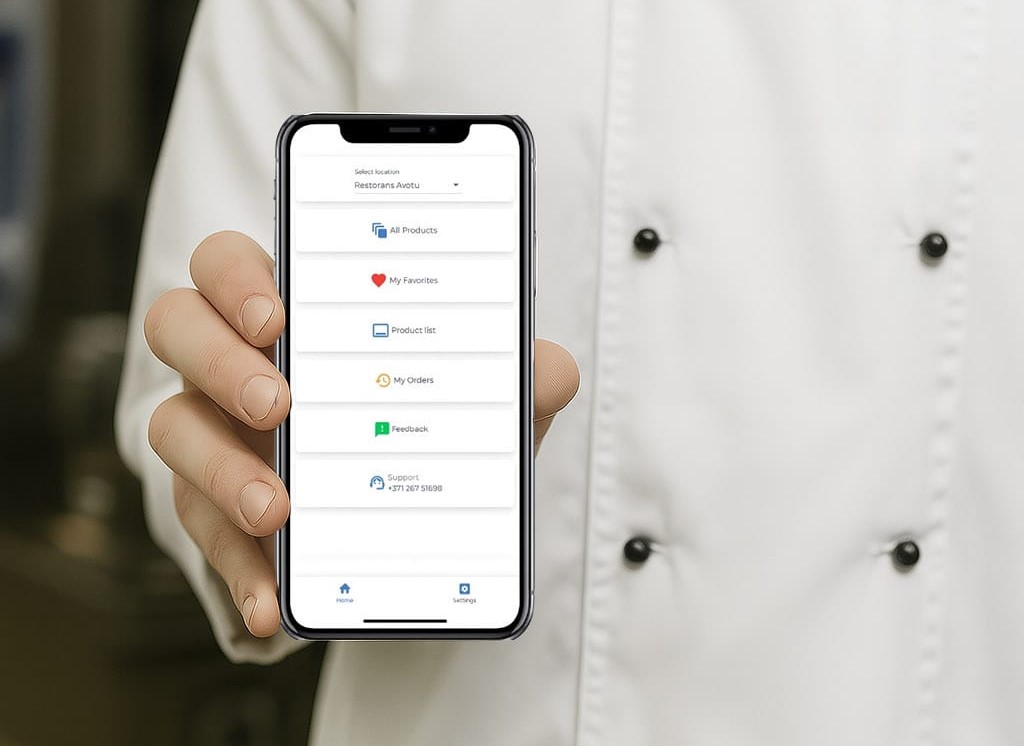
Latvian IT companies working on nationwide open source projects are gaining unique experience that can later be exported. This is also our goal with Dativa. We have already implemented our first international projects—in Šiauliai, Lithuania, we developed a system for automatically determining residents’ status and calculating personal benefits. The HoReCa sector solution Wendoapp, developed in Latvia, has already gained significant popularity throughout the Baltics with clients such as MyFitness, KOOL DUS, and Delicio. I see that over the next five years, Latvian IT companies could make a serious impact on EU-wide projects. The EU has realized that it will only be globally competitive if it fully harnesses its potential, and Latvia’s experience—especially in collaboration with Estonia, Lithuania, and Ukraine—can make a significant contribution to “old Europe.”
Therefore, the state must systematically promote export capacity through open source and transparency, not just through traditional export support programs. Every state-funded IT solution is a potential export product. We must create a system in which this potential is utilized.
Security as a Component of National Defense
I have previously called for critical IT infrastructure to be included in the national defense budget—5% of GDP. My personal view is that the importance of physical security must not be underestimated, but the situation changes from year to year. We see that various types of hybrid attacks are almost always used alongside conventional military threats. A cyberattack is carried out almost before every military attack. We saw this in the recent conflict between the U.S. and Iran, where Poland announced that its critical IT systems had been attacked by hackers linked to Iran.
We must be prepared for these challenges, and we cannot allow the circulation of prescription medications to be disrupted for days or local governments to be unable to pay teachers’ salaries. These are just a few examples. Everyone must understand that the scale of the threat is growing every year—elsewhere in the world, ever-greater resources are being invested in searching for vulnerabilities in our systems. Cybersecurity must not be left solely on the shoulders of local governments; it must be a centralized, national-level priority.
What we can already see today:
I understand that I am proposing a great deal all at once—centralization, a new catalog model, data sovereignty, open source, and security as an integral part of defense. It may seem as though these are ambitions for the distant future. But that is not the case.
In the summer of 2025, parents in Riga were able to apply for the 10th-grade admissions process entirely online for the first time via the latvija.gov.lv portal. In previous years, the application process was chaotic—parents were running around to multiple schools at the same time, documents were duplicated, and schools were delayed in forming classes. In 2025, this process was transformed into a unified e-service with authentication via eID card, e-signature, or SmartID. The timing of the application no longer affected the competition results; these were determined solely by academic performance. This is what IT looks like when it works well: simple, fair, and measurable.
When the pandemic began, Latvia was among the first countries to connect to the unified EU-wide QR certificate system. E-prescriptions are already so commonplace in Latvia that you no longer have to worry about how a prescription issued in Latvia can also be used in Estonia. In many parts of Europe, this is still not possible.
Latvia’s IT exports have exceeded half a billion euros in just the last two years and continue to grow. It is a sector capable of bringing both economic value and international reputation to the country. Our choice right now is simple: either we harness this potential through centralized, professional, and transparent governance, or we let it fade away amid fragmentation and discord. I believe the first option is the only sensible one.